
Ever woken up weak even after a full eight hours of sleep? Chances are, you break up your REM sleep cycle. Understanding your sleep phases and using a REM Sleep Cycle Calculator can make all the difference between waking up refreshed or feeling like a zombie.
Understanding the Sleep Cycle
Your sleep is not one continuous state, it is a rhythm that flows through several stages of sleep, usually lasting around 90 minutes per cycle. A typical night involves 4 to 6 complete cycles.
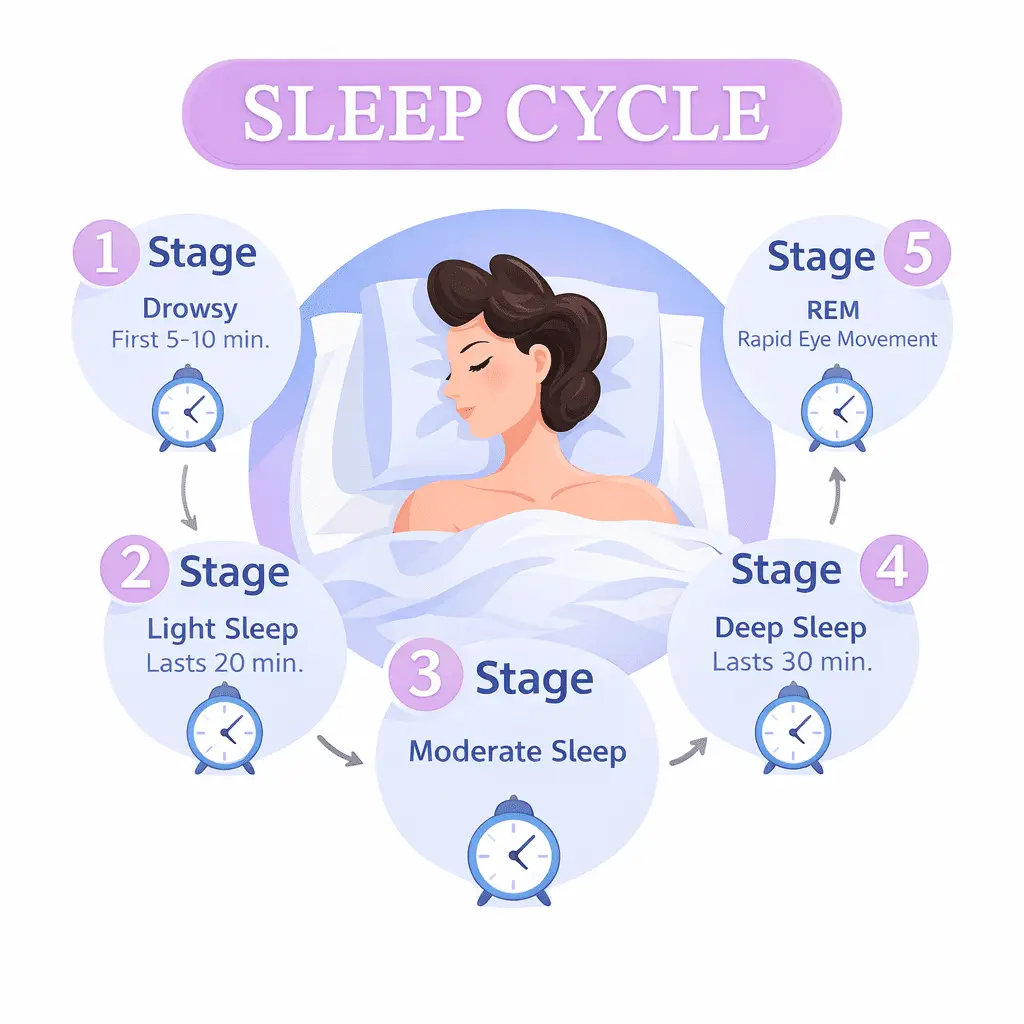
The Four Stages of Sleep
- Stage 1 (Light Sleep) – The moment you start drifting off. Easy to wake from.
- Stage 2 (Moderate Sleep) – Your body temperature drops, and brain waves slow down.
- Stage 3 (Deep Sleep) – Vital for physical recovery and immune function.
- Stage 4 (REM Sleep) – Where dreaming happens and memory gets consolidated.
What Is REM Sleep Cycle Calculator and Why It Matters
REM stands for Rapid Eye Movement. During this phase, your brain becomes highly active, similar to when you are awake. Your eyes dart around under your eyelids, and vivid dreams occur.
But REM is not just about dreaming it is crucial for mental restoration, emotional stability, and memory processing.
How Sleep Cycles Work
Each cycle progresses from light to deep sleep, then into REM. A full cycle typically lasts 90 minutes, but your REM phases lengthen as the night goes on. The first REM stage might last only 10 minutes, while the final one can stretch to nearly an hour.
Why You Should Track Your Sleep Phases
Tracking your sleep helps you:
- Identify irregular patterns
- Improve focus and energy levels
- Reduce grogginess
- Boost mood and cognitive performance
By understanding when you hit REM, you can plan your bedtime and wake time to position with natural sleep-wake cycle.
Introducing the REM Sleep Cycle Calculator
A REM Sleep Cycle Calculator estimates your best wake-up or bedtime based on 90-minute cycles. It helps you avoid waking mid-cycle when you feel the most tired.
How It Works
You enter your bedtime or desired wake-up time, and the calculator predicts when you should wake or sleep to complete full cycles.
Key Features
- Custom cycle length settings
- Adjustments for falling asleep time
- Personalized sleep optimization
How to Use a REM Sleep Cycle Calculator
- Decide when you want to wake up.
- Subtract multiples of 90 minutes (plus 15 minutes to fall asleep).
- Choose a bedtime that fits your schedule.
For instance, if you want to wake at 7:00 AM, the calculator might suggest bedtimes at 9:30 PM, 11:00 PM, or 12:30 AM.
Sample Sleep Cycle Calculations
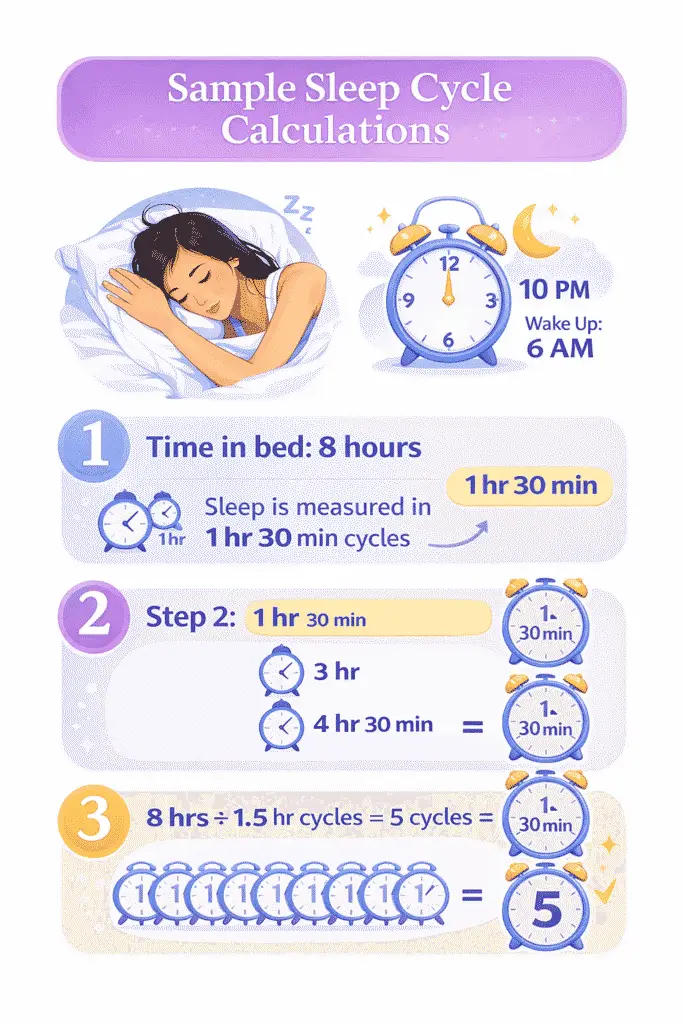
Example 1: Bedtime at 11:00 PM
- You fall asleep around 11:15 PM.
- Each 90-minute cycle repeats at 12:45 AM, 2:15 AM, 3:45 AM, 5:15 AM, and 6:45 AM.
- Waking at 6:45–7:00 AM means you finish your 5th cycle—ideal timing.
Example 2: Bedtime at 1:00 AM
- Sleep onset: 1:15 AM
- Cycles end around 2:45, 4:15, 5:45, 7:15, and 8:45 AM.
- Best wake time: 7:15 or 8:45 AM.
Tips to Improve REM Sleep
- Stick to a consistent sleep schedule.
- Keep your bedroom cool and dark.
- Avoid caffeine and screens before bed.
- Try relaxation techniques like breathing exercises or meditation.
The Role of Technology in Sleep Tracking
Modern wearables like Fitbit, Apple Watch, and Oura Ring track your heart rate, movement, and REM duration. Pairing these devices with a calculator helps visualize your patterns and make adjustments.
Common Sleep Problems That Affect REM
- Insomnia: Trouble falling or staying asleep.
- Sleep Apnea: Breathing interruptions that fragment REM cycles.
- Stress and anxiety: Can shorten or delay REM onset.
Foods and Habits That Boost REM Sleep
- Tryptophan-rich foods (turkey, bananas, milk) encourage melatonin production.
- Magnesium and B6 help regulate sleep hormones.
- Avoid heavy meals, alcohol, and screens right before bed.
The Science Behind Sleep Quality
During REM, your brain consolidates memories, processes emotions, and clears out neural waste. Deep sleep restores your body, while REM restores your mind. You need both for optimal well-being.
How to Wake Up Feeling Refreshed
Waking between sleep cycles prevents sleepy. Smart alarms can detect light sleep and gently wake you within an ideal time window. Think of it like catching a wave get the timing right, and you glide into your day easily.
Conclusion
The REM Sleep Cycle Calculator is more than a tool it is a simple tool for unlocking better mornings and improved mental health. By understanding your natural sleep phases, you can sleep smarter, not longer.
FAQs
1. How many REM cycles should I get each night?
Most adults experience 4–6 REM cycles per night for optimal rest.
2. Can I calculate my REM sleep manually?
Yes! Estimate 90 minutes per cycle and plan your bedtime around your wake-up time.
3. How long does it take to reach REM sleep?
Usually about 90 minutes after you fall asleep.
4. Does dreaming only happen during REM?
Mostly yes, but light dreams can occur in other stages too.
5. Can I improve REM sleep without gadgets?
Absolutely through regular routines, stress management, and a healthy lifestyle.